Tree Inspections Red Deer
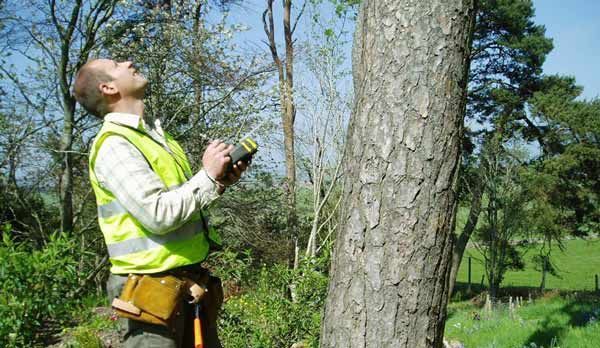
We recommend an annual tree inspection of all trees on your property each year or two, you probably visit your doctor for a check-up to make sure everything’s ok and to discuss any health concerns you may have. It’s the same with trees, a tree inspection allows us to identify any change in the tree’s health before the problem becomes too serious. By having regular inspections of mature trees (at least once a year), you can prevent or reduce the severity of future disease, insect, and environmental problems.
Get Instant Quote
Contact Us
Scheduled A Tree Inspection
What Happens During a Tree Inspection?
During a tree inspection, our arborists look at many things to evaluate the vigor and health of a tree, including the four points below.
Is the tree producing new leaves or buds, and what do they look like?
A reduction in the extension of shoots (new growing parts), such as buds or new leaves, is a fairly reliable cue that the tree’s health has recently changed. To evaluate this, our arborists compare the growth of the shoots over the past three years to see whether there’s a reduction in the tree’s typical growth pattern. Obviously, we can’t do this unless the tree has had regular check-ups.
How do the leaves’ size and shape look? Does twig growth seem normal?
Anything out of the ordinary, such as spotted, deformed, discolored or dead leaves and twigs, can be signs of disease or insect problems that should either be treated or closely monitored.
Are there any signs of crown dieback (gradual death of the upper part of the tree)?
Further signs of poor tree health are trunk decay, crown dieback, or both. These symptoms often indicate problems that began several years before. Loose bark or deformed growths, such as trunk conks (mushrooms), are common signs of stem decay.
Any abnormalities found during a tree inspection are noted and our arborists will closely watch the tree(s) over time to determine if and when action should be taken. If any problems are found that need immediate action, our Certified Arborists will recommend treatments that are tailored specifically to the issues your trees are experiencing. Regular tree inspections are a vital part of tree care, ensuring the health and safety of your trees and property. Hiring Red Deer Arborists for inspections and addressing any identified issues promptly can help you maintain a beautiful and safe landscape for years to come.
How often should I prune my trees?
It depends on the age of your tree. Newly-planted trees should not be pruned for the first 2-3 years.
After that, young trees should be pruned every 2 to 3 years, while mature trees will need to be pruned every 3 to 5 years.
Additional pruning may be done on an as-needed basis.
How will I know if my tree should be pruned?
Many times, you'll be able to see that tree pruning or trimming would be beneficial.
For example, branches may be hitting your roof or blocking a walkway, or you may notice dead or broken branches.
We have an article full of questions to ask before trimming a tree that can help you determine what steps to take.
Plus, you can always contact us for a tree consultation.
What are the benefits of properly pruning my trees?
Properly pruning your trees provides many benefits. It helps your trees live a longer and healthier life and helps trees that are still growing to develop good branch structure.
Your property value and curb appeal also increase with properly pruned and maintained trees.
Can I trim or prune my trees myself?
We don't recommend it. Between the heights involved and the dangerous equipment, the chance of injury (or worse!) is high.
Our tree professionals are thoroughly trained in safety procedures for tree care services.
We’re happy to answer any questions you may have and our experienced estimators will be able to walk you through how the job will be done and what it will take to do it right. You may be surprised by just how affordable quality tree work can be especially when you compare it to doing it yourself!
Do you top trees?
We do not top trees. This practice of cutting off the top of trees is detrimental to the tree, ends up costing the homeowner more, and is not considered good practice in the professional tree care industry.
Can my trees be pruned in winter?
Yes! With most trees dormant during the winter months, it is an ideal time to prune.
The lack of leaves on deciduous trees allows us to more clearly view the tree's structure, the frozen ground leads to less damage to your lawn, and most pests and diseases aren't active, so your tree is safe from infestations.
When is the best time to prune a tree?
There are different times to prune different trees, for example, most flowering trees should be pruned after they bloom, and Maples can be pruned most times of the year. It is best to discuss pruning with the estimator because every tree is unique in its placement on your property and it’s condition.
My tree is near power lines. Can you still prune it?
If a tree or limb is touching a power line, call us so we can evaluate whether it should be removed. If a limb has fallen onto a line, call us to remove it. For safety, do not attempt to remove any trees or tree limbs from power lines yourself!